As a professional jeweler, I understand that when you choose a handmade piece, you are not just purchasing metal and stone; you are acquiring a unique story, an investment in someone’s skill, and a tangible piece of art. Unlike mass-produced items, handcrafted jewelry holds the unique energy and intentionality of the maker. This is especially true for the diverse and beautifully unique creations found in the vibrant arts community, which includes the incredible handmade jewelry from Greenville, NC.
Because artisan jewelry often features traditional fabrication alongside innovative materials like delicate porous gems, polymer clay, or gold-filled components, it requires a nuanced approach to care. Longevity is not accidental; it is a direct result of mindful daily habits and educated maintenance. Proper care is the commitment needed to ensure that the artistry you purchased endures, remaining brilliant for years to come.
Understanding Handmade Jewelry: Craftsmanship and Chemistry
To truly protect your investment, you must first understand what makes handmade jewelry structurally different from typical commercial pieces. The care routines we establish are based on preserving these unique structural advantages and mitigating specific chemical vulnerabilities.
The Fabricated Difference: Why Handmade Lasts
In my workshop, I frequently engage in the process of hand-fabrication, which involves shaping, hammering, and rolling metal. This process puts stress on the metal, intentionally compressing its internal grain structure. This compression is called work hardening, and it results in metal that is denser, significantly harder, and much more resistant to scratching and bending than cast metal.
In contrast, commercial casting involves pouring molten metal into a mold. While efficient, this method bypasses the work-hardening process, leaving the ions loose and the structure soft. Critically, casting can introduce internal flaws like “porosity,” which are microscopic pockets of air. These internal defects are largely invisible but destabilize the piece.
I have spent years repairing cast jewelry, and the items requiring the most frequent attention are often those that were casted. The danger of porosity is extreme: if an air bubble forms in a prong intended to hold a gemstone, that prong is already compromised. After a year of wear and tear, that tiny internal defect can lead to catastrophic failure, causing the prong to break and the stone to fall out entirely. By investing in hand-fabricated work, you are buying superior structural integrity that minimizes these long-term repair risks. To learn more about the structural integrity of different jewelry creation methods, read this detailed comparison between hand-fabricated and cast jewelry.
Know Your Materials: The Modern Artisan’s Palette
The contemporary artisan, especially those crafting handmade jewelry from Greenville, NC, uses a broad spectrum of materials. Knowing what your piece is made of dictates the appropriate care routine.
Gold-Filled vs. Gold-Plated
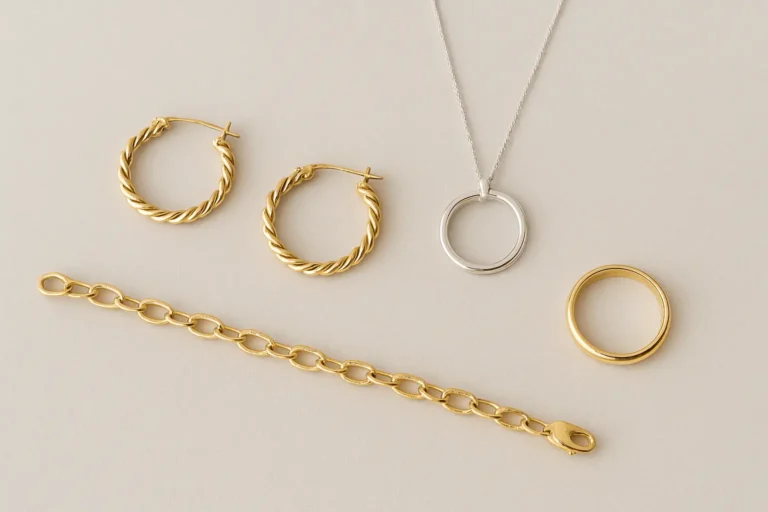
This distinction is crucial for durability. Gold plating involves electroplating a very thin, superficial layer of gold onto a base metal. This layer is susceptible to scratching, fading, and peeling over time. Gold-filled jewelry, however, is made by mechanically bonding a thick sheet of gold to a base metal (usually brass). The gold layer must constitute at least 5% of the total metal weight—which is up to 100 times thicker than standard plating. Because of this substantial layer, gold-filled items are much more durable and can last between 10 and 30 years with proper care. For an in-depth breakdown of these materials, see our detailed guide on Gold-Filled vs. Gold-Plated Jewelry.
Sterling Silver and Tarnish
Sterling silver is composed of 92.5% silver and 7.5% other metals, typically copper. Tarnish is not dirt; it is a chemical reaction where the copper alloy reacts with airborne sulfur compounds and oxygen, forming a dark surface layer of copper oxide or sulfide. This reaction is accelerated by moisture and pollution. Interestingly, one of the best ways to slow down tarnish is simply to wear your silver frequently, as the natural oils from your skin can provide a slight protective barrier against the air.
Brass, Copper, and Skin Reaction
Many beautiful artisan pieces feature brass or copper. When these metals come into contact with the natural salts and acids (like lactic acid) in sweat, they produce copper salts that can be absorbed by the skin, leading to a harmless, but often unsightly, green or black discoloration. This is more noticeable in humid environments or for individuals with slightly more acidic skin. A quick, soft wipe-down after wearing usually prevents this reaction.
The Golden Rules of Daily Care
Preventative maintenance is the most effective way to ensure the long-term beauty of your jewelry. These daily habits minimize exposure to corrosive chemicals and physical stress.
The “Last On, First Off” Protocol
One of the most common causes of long-term damage is exposure to cosmetics. Perfumes, hairsprays, and lotions contain alcohol, acids, and other chemicals that attack the alloys in metals and dull the surface of gemstones.
The simple solution is to always treat your jewelry as the finishing touch to your routine:
- Apply products first: Complete your morning routine—showering, hairspray, makeup, and lotion application—before putting on your jewelry.
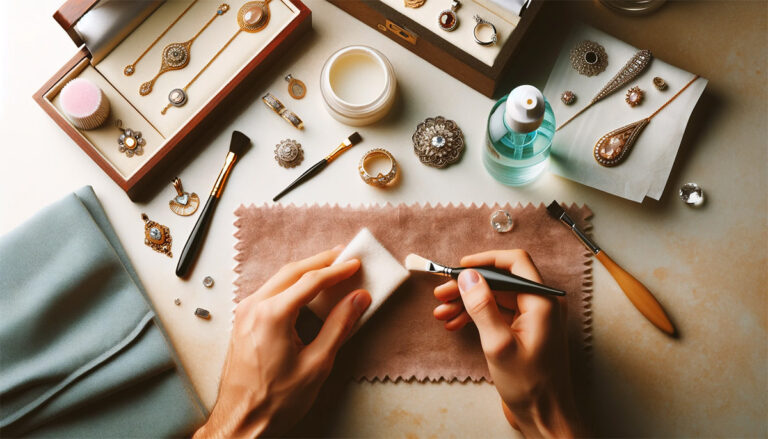
- Wipe away residue: After wearing a piece, especially rings and earrings that touch the skin, take a moment to gently wipe it down with a soft, clean cloth. This removes the invisible layer of sweat, body oils, and residual cosmetics that quickly build up and dull the shine of your metal and gems.
Environmental Avoidance: Chlorine, Sweat, and Oils
I constantly advise clients that chemical avoidance is non-negotiable for preserving their pieces.
Chlorine’s Corrosive Power
Chlorine is perhaps jewelry’s most aggressive enemy. Whether it is found in swimming pools, hot tubs, or household cleaners like bleach or strong detergents, chlorine aggressively attacks the alloys (like copper and nickel) mixed with gold and silver. This chemical attack causes the metal to become brittle, particularly in areas already under physical stress, such as prongs or delicate solder points. This kind of structural damage is often irreversible.
Hands-On Activities
Always remove jewelry—especially rings and bracelets—before engaging in activities that involve physical impact, chemicals, or excessive moisture. This includes cleaning, cooking, gardening, and exercising. I once heard about a copper cuff that developed green spots almost instantly simply from incidental exposure to cleaning chemicals in a kitchen. Even robust pieces like large hammered cuffs or dangling Handmade Earrings should be removed before exercising to avoid snagging, bending, or scuffing on gym equipment.
Expert Handling: Preventing Invisible Wear
Physical damage is often cumulative, resulting from poor handling habits over time. When removing or putting on a piece, always hold it by the most substantial part, typically the band or the edges of the setting, rather than pulling on thin chains or gripping the stone itself.
For rings, avoid the habit of gripping the stone and pulling or wiggling the ring off your finger. Repeatedly transferring force directly to the setting weakens the prongs over time. Instead, place your thumb and index finger on the sides of the ring’s band and gently rotate it as you pull it off your finger. This small change in technique dramatically extends the life of your stone settings. If you are looking to purchase new high-quality(/handmade-rings), ensure you know your correct size.
Cleaning & Storage Best Practices
Once preventative measures are established, routine cleaning and proper storage become the twin pillars of long-term maintenance.
The Universal Gentle Cleaning Recipe
For most durable materials—solid gold, platinum, and hard gemstones like diamonds, sapphires, or rubies—a simple mild solution is best.
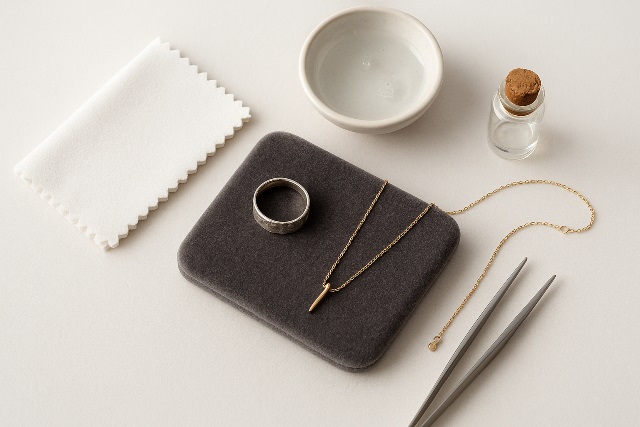
- Prepare the Solution: Mix a few drops of mild, fragrance-free dish soap (like a basic liquid dish detergent) with lukewarm water in a small bowl.
- Soak Gently: Allow the jewelry to soak for five to ten minutes to loosen any dirt or grime.
- Brush: Use a clean, soft-bristled toothbrush (reserved exclusively for jewelry cleaning) to gently scrub the crevices and the back of the settings, where oils and makeup accumulate.
- Rinse and Dry: Rinse the piece thoroughly under clean, lukewarm water to ensure all soap residue is removed. Pat the jewelry completely dry immediately with a lint-free or microfiber cloth to prevent water spots and moisture-induced tarnish. This gentle method is widely recommended by jewelers for .
Specialized Cleaning Protocols: Protecting Delicates
Some materials popular in artisan work require unique, non-standard cleaning methods. Aggressive home cleaners, steam, and ultrasonic machines can cause irreversible damage to these pieces.
Porous Gems (Pearls, Opals, Turquoise)
Soft or porous gemstones like pearls, opals, and turquoise are absorbent. Soaking them can trap moisture and soap residue within the gem’s structure, causing damage and discoloration. I learned this lesson early in my career when I nearly ruined a beautiful pearl ring by soaking it in a strong chemical meant for silver.
The Rule: Never soak, steam, or use ultrasonic cleaners on these pieces. Instead, after each wear, gently wipe the pearls with a soft, slightly damp cloth to remove body oils and perspiration. If a deeper clean is necessary, use a tiny amount of mild soap on the cloth, then wipe with a clean, damp cloth to rinse, and lay flat to dry completely.
Tarnish-Prone Metals (Silver, Copper, Brass)
Regular polishing with a cloth designed for the specific metal helps restore luster. For heavy tarnish on sterling silver, an effective, non-abrasive method is the aluminum foil soak: line a bowl with aluminum foil, add boiling water, 1/4 cup baking soda, and two teaspoons of kosher salt. Soak the silver pieces for up to five minutes. This solution chemically reverses the oxidation. For brass or copper, mild discoloration can be lifted using a gentle paste of lemon juice and baking soda. Always rinse and dry these pieces immediately afterward.
Polymer Clay and Resin
Polymer clay is flexible but should never be bent. These materials are susceptible to discoloration and softening if exposed to harsh chemicals or alcohol. To clean off makeup or surface dirt, use a soft, damp cloth or an unscented baby wipe. Crucially, do NOT use acetone or rubbing alcohol on clay pieces that are hand-painted, varnished, or have gold leaf, as these solvents will dissolve the surface layer.
Table 3: Specialized Cleaning Solutions by Material
| Material/Gemstone | Cleaning Frequency | Safe Method (Do) | Unsafe Method (Don’t) |
| Solid Gold/Durable Gems | Monthly deep clean | Mild dish soap, lukewarm water, soft brush | Bleach, Chlorine, Ultrasonic Cleaners |
| Sterling Silver/Brass/Copper | When tarnish appears | Aluminum soak, soft polishing cloth, mild lemon/baking soda paste | Harsh ammonia cleaners; prolonged moisture |
| Gold-Filled Jewelry | Every few weeks | Gentle wipe with soft cloth, mild soapy water rinse | Chemical dips, abrasive scrubbing, strong solvents |
| Porous Gems (Pearls, Opals) | After every wear (wipe) | Soft, damp cloth; mild soap only if necessary, then thorough rinse/dry | Soaking, Steaming, Ultrasonic Cleaners, High Heat, Hard Water |
| Polymer Clay/Resin | As needed | Soft, damp cloth or unscented baby wipe | Acetone (unless non-varnished), bending, prolonged direct sunlight |
Mastering Long-Term Storage: A Ritual, Not an Afterthought
Tossing delicate jewelry into a drawer full of random items guarantees scratches, tangles, and bending. Storage should be treated like a ritual to preserve the piece’s structure and finish.
Separate and Secure: Always store each piece separately. Fabric-lined boxes, individual soft pouches, or compartmentalized trays prevent different pieces from rubbing against each other and causing abrasion. Delicate chains, especially designs, should be hung to prevent kinks and stress on jump rings.
Cool, Dry, and Dark: Humidity is a powerful catalyst for tarnish, especially in silver and copper. Store your collection in a cool, dry place, away from direct sunlight and extreme temperatures. Consider adding silica gel packets or anti-tarnish strips to your jewelry box to absorb environmental moisture and sulfur.
The Danger of Heat: High temperatures can be structurally damaging. Heat causes metals to expand, which puts pressure on settings. Temperatures over 150°F (easily reached inside a hot car) can eventually loosen prongs, making stone loss a serious risk. Repeated cycles of heating and cooling also create tiny stress points, weakening the metal over time.
How to Protect Your Jewelry from Damage
Protection involves recognizing and avoiding the environmental and physical factors that contribute to wear, beyond just chemical exposure.
Physical Stress and Impact
While hand-fabricated metal is work-hardened for durability, it is not indestructible. Sharp impacts or repeated contact with abrasive surfaces can still lead to deep scratches or dents.
It is essential to be proactive and check your jewelry daily for signs of physical stress. If a ring starts catching on clothing or if a chain link appears strained or twisted, take immediate action to avoid catastrophic breakage.
Thermal and UV Threats
Beyond the corrosive effects of chemicals, thermal exposure poses a molecular threat to your jewelry.
Heat and Light: Intense UV rays, even on cloudy days, can break down chemical bonds at a molecular level, impacting the long-term durability of the material. Furthermore, prolonged exposure to heat and UV light can dull or fade softer, colored gemstones like amethyst and opal, stripping them of their vibrant appearance. Always store jewelry away from window sills or heat vents.
Table 4: Daily Wear Do’s and Don’ts for Maximum Longevity
| Activity/Chemical Exposure | Action | Why (Expert Insight) |
| Morning Routine (Perfume, Hairspray) | DON’T: Put jewelry on first. | Chemicals break down metal alloys, dull stones, and accelerate corrosion. |
| Showering/Swimming | DO: Remove all jewelry. | Chlorine and soap residue accelerate tarnish; water/moisture are harmful to many gems. |
| Cleaning House | DO: Wear gloves or remove rings/bracelets. | Bleach/ammonia aggressively attack gold and silver, weakening prongs. |
| Applying Lotion/Sunscreen | DON’T: Allow residue buildup. | Creates a sticky film that attracts dirt and dramatically dulls shine. |
| Removing Rings | DO: Rotate the band, avoid pulling the stone/shank. | Pulling on the setting over time weakens the prongs, leading to loose stones. |
| Exercising | DO: Remove rings, bracelets, and dangling earrings. | Minimizes exposure to sweat (acidic) and prevents snagging/scuffing. |
When to Get Professional Maintenance
While home care is essential for maintenance, there are structural issues that must be addressed by a professional bench jeweler. Attempting complex repairs at home without the specialized tools and expertise almost always results in further, often irreversible, damage that increases the eventual repair cost. Learn more about for structural issues.
Identifying Structural Red Flags
Your jewelry will often warn you when professional attention is needed.
The Rattling Test: If you gently shake a ring near your ear and hear a faint rattling or clicking sound, or if the stone moves slightly when tapped lightly with a fingernail, the stone is loose. If this occurs, stop wearing the piece immediately. Loose stones are most often caused by worn or bent prongs, or a setting weakened by chemical corrosion.
Visual Wear and Tear: Look closely at the metal. Do the prongs look thin or worn down? Are clasps or hinges squeaking or grinding? These noises indicate worn-out components that are prone to breakage. Similarly, if the bottom of your ring band (the shank) is noticeably thinning or deeply scratched, it may be time for resizing or re-shanking to prevent breakage.
When DIY Isn’t Enough
Professional jewelers have the knowledge, equipment (such as laser welders and specialized ultrasonic cleaners), and experience required to maintain the structural integrity of your pieces. Common issues that absolutely require professional intervention include repairing broken clasps, re-tipping or replacing damaged prongs, laser-welding fine chain breaks, or professionally removing deeply embedded dirt and oil buildup that home cleaning cannot touch.
I recommend an annual or biannual professional inspection. A quick check-up allows the jeweler to spot minor stress points or slightly bent prongs before they lead to a catastrophic event, like a stone loss. This is an essential step in loss prevention.
The Value of a Local Bench Jeweler
Choosing a local artisan often means purchasing a piece created using highly specific fabrication techniques. When maintenance or repair is required, entrusting that piece to a local bench jeweler ensures that the work respects the original construction methods and the unique materials used. We understand the integrity required to maintain these custom creations. Building a relationship with a trusted local expert provides not only repair services but also invaluable long-term guidance tailored to the lifespan of your treasured items.
Final Thoughts: Investing in Longevity
Your handmade jewelry is an enduring work of art—a testament to skill and creativity. By adopting these mindful habits—avoiding chemicals, ensuring proper handling, and committing to specialized cleaning and storage rituals—you are actively investing in the longevity of the piece. This small dedication ensures that the beauty and story held within your jewelry remain brilliant, ready to be enjoyed for a lifetime and passed down to future generations.
To explore more unique, lasting designs and start your own legacy collection, we invite you to [browse our latest handmade jewelry collection].